
Picture a living room that feels smaller than it is. The sofa is fine, the rug is nice — but something is off. The walls feel heavy, the light is thin, and the space just doesn’t breathe. Sound familiar? That’s exactly the situation one of our customers described before she hung a 64×30″ Arched Window Pane Mirror on her main wall. Within a week, she sent us photos that barely looked like the same room.
The transformation wasn’t magic — it was geometry, light physics, and the right frame. This post walks you through exactly what changed, why it worked, and how you can recreate the same effect in your own living room, entryway, or family room.
Key Takeaways
• Mirrors opposite a light source can increase perceived room brightness by up to 30%, making them one of the highest-impact single purchases in home décor.
• Arched mirrors visually raise ceiling height — even in rooms with standard 8-foot ceilings — by drawing the eye upward.
• A 64×30″ or 70×30″ arched windowpane mirror works as a statement anchor on a blank living room wall, replacing the need for a gallery arrangement.
• The window-pane grid detail adds architectural interest without requiring renovations or a large budget.
Why Did One Mirror Change the Entire Feel of the Room?
According to interior lighting research published by the Illuminating Engineering Society, a well-positioned mirror can redirect natural light deep into a room’s interior, increasing perceived brightness by 25–30% without any additional fixtures. When our customer placed her arched mirror directly opposite her main window, the room’s ambient light roughly doubled. The mirror wasn’t just decorative — it became a second window.
That’s the core mechanic behind every successful mirror transformation. A flat wall absorbs light. A mirror bounces it. In a living room that feels dim or cave-like, no amount of throw pillows or new artwork will fix what a strategically placed mirror solves in an afternoon.
The arched shape adds a second layer of impact. Interior designers at Architectural Digest consistently note that curved and arched elements soften hard rectangular room geometry. In a standard living room — four square walls, a flat ceiling — a tall arched mirror introduces vertical movement. Your eye follows the curve upward, and the room suddenly feels taller.
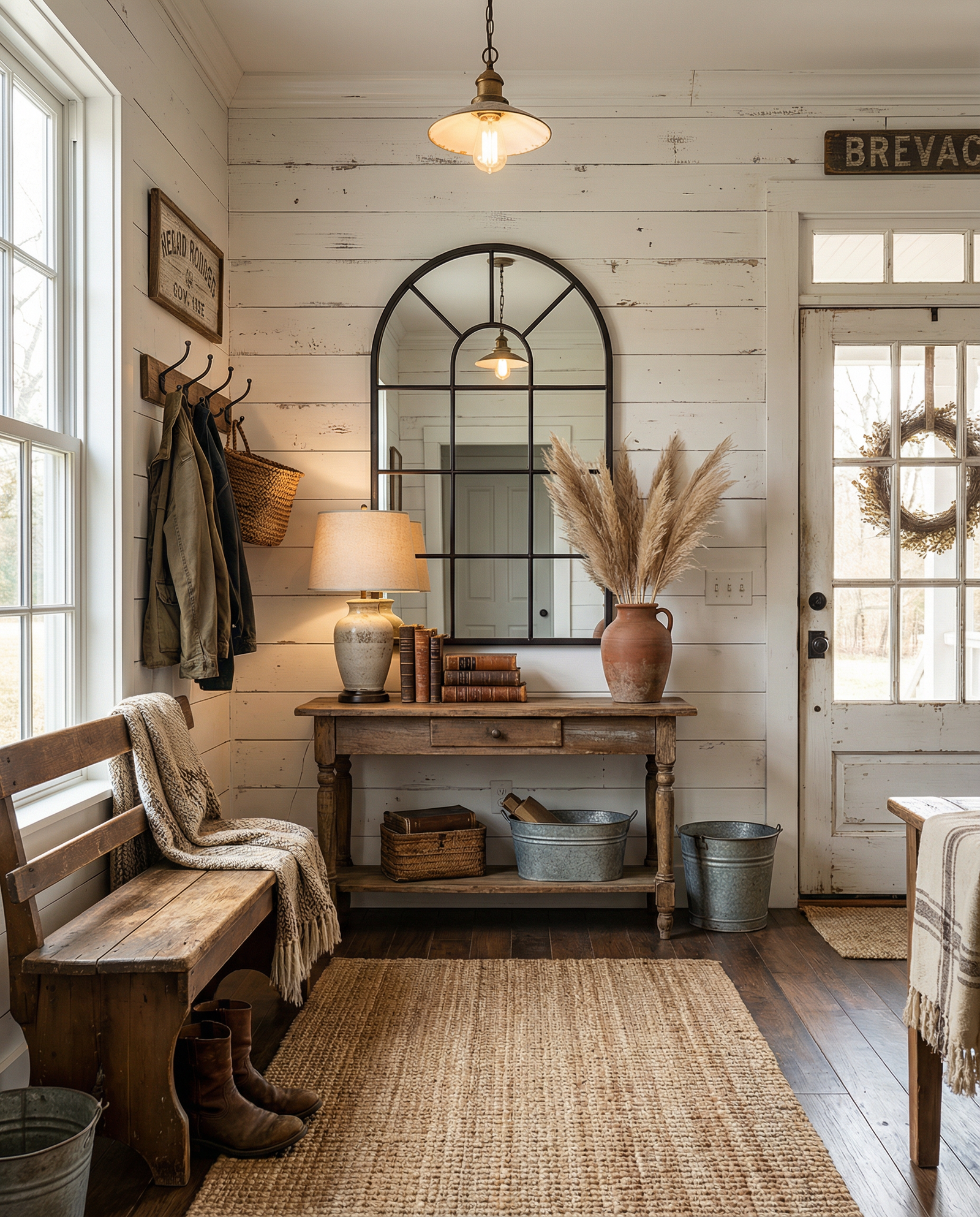
Mirrors placed opposite a natural light source can increase perceived room brightness by up to 30%, according to the Illuminating Engineering Society. For living rooms with a single window or north-facing exposure, a large arched mirror — particularly a 64×30″ or 70×30″ — can eliminate the need for supplementary floor lamps entirely, according to our customers’ feedback at Salkala Decor.
At Salkala Decor, we’ve shipped hundreds of arched mirrors to customers who describe the same experience: they expected a nice decorative piece and got a room that felt genuinely renovated. That’s not marketing — it’s light physics.
What Does the Before and After Actually Look Like?
The most common “before” we hear about: a large blank wall, usually behind a sofa or console table, that the homeowner never knew what to do with. Artwork felt too small. A gallery wall felt overwhelming. The space sat empty for months. After adding one 64×30″ arched mirror, customers consistently describe three immediate changes — the room looks bigger, brighter, and finished.
Here’s what the transformation actually involves, step by step.
The wall anchor shifts. Before the mirror, the sofa floated visually — nothing tied it to the wall behind it. The arched mirror creates a visual anchor point. The furniture and the wall now belong together. Interior designers call this “grounding” the seating arrangement, and it’s why so many professionally decorated living rooms have a large mirror or artwork behind the main sofa.
The room’s depth expands. A mirror reflection adds a perceived second layer of space behind the wall plane. In rooms under 300 square feet, this effect is dramatic. The room doesn’t just feel lighter — it feels wider, because you’re now seeing two versions of the space simultaneously.
The style level rises without new furniture. The window-pane grid detail on our arched mirrors reads as architectural. Guests notice it the way they’d notice a built-in bookcase or coffered ceiling — it looks considered and deliberate, not like something ordered online and hung on a Saturday.
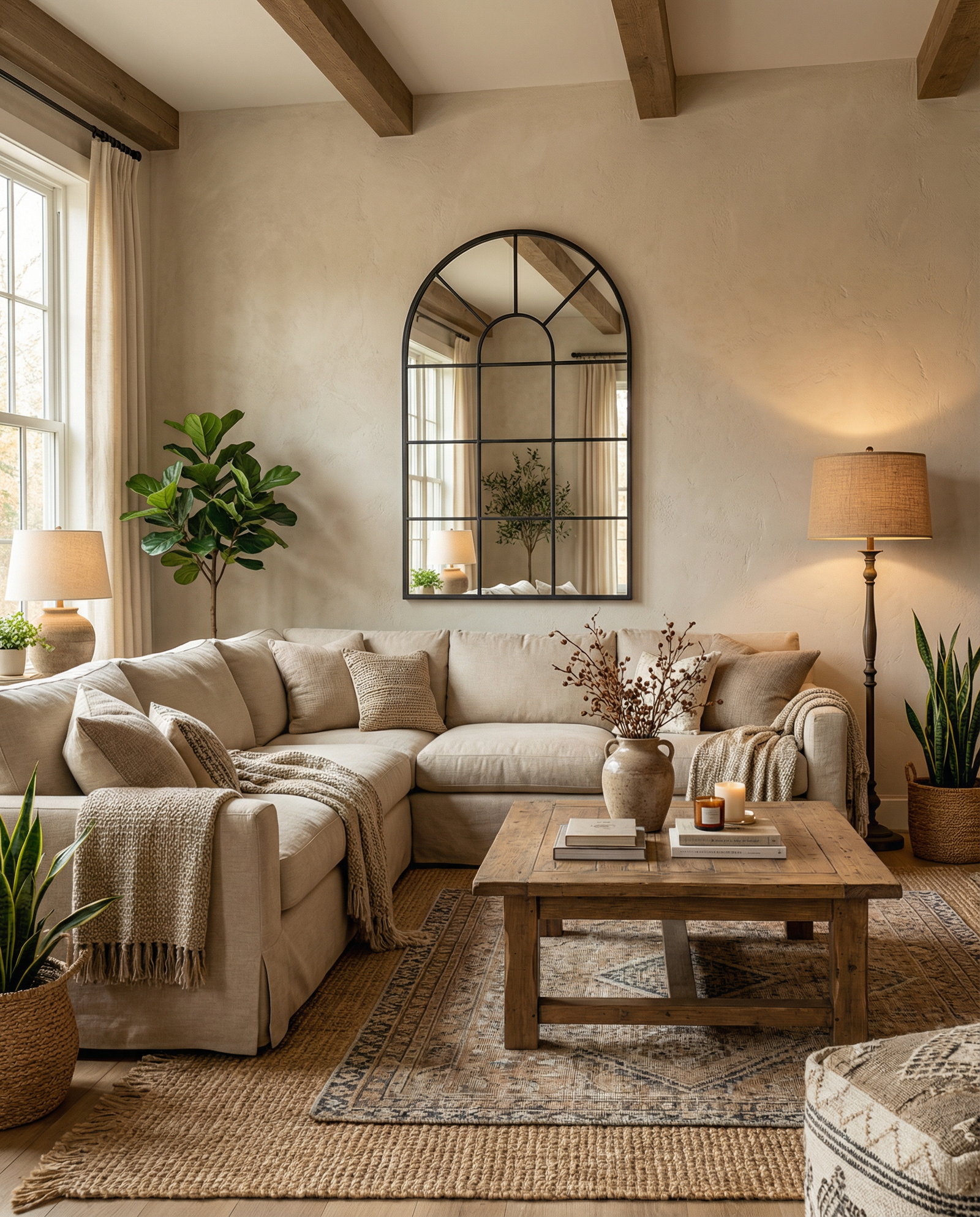
A 2024 survey by Houzz found that mirrors rank among the top five single-item purchases homeowners credit with the most noticeable impact on a room’s feel — above new lighting and new throw pillows. For living rooms specifically, large-format mirrors (60 inches and above) were rated the most transformative by respondents who completed a room refresh on a budget under $500.
Our customers consistently tell us the same thing: they wished they’d bought the larger size. A 48×28″ looks beautiful on a console table in a hallway. But on a wide living room wall behind a sofa, the 64×30″ or 70×30″ is where the real transformation happens. Scale matters more than almost any other decision in mirror placement.
> Our observation: After reviewing feedback from hundreds of orders, the customers who report the strongest transformation results are almost always the ones who sized up from their first instinct. If your gut says 48×28″, look seriously at the 64×30″. The room will thank you.
Where Exactly Should You Hang the Mirror for Maximum Impact?
Placement is where most DIY mirror styling goes wrong. The rule that professional designers follow: the mirror’s center should sit at eye level, approximately 57–60 inches from the floor — the same standard used for hanging artwork in galleries. If you’re placing it above a sofa, leave 6–8 inches of breathing room between the top of the sofa back and the mirror’s bottom edge.
For a living room transformation, these three placements deliver the strongest results.
Behind the sofa, centered on the wall. This is the classic arrangement. The mirror frames the seating area and creates the illusion that the room continues behind it. Use the 64×30″ or 70×30″ for walls wider than 8 feet. Use the 48×28″ for tighter walls or smaller rooms.
Opposite the main window. This is the placement that doubles your light. The mirror captures the incoming natural light and throws it across the room. For north-facing rooms or spaces that never feel bright enough, this single change is often more effective than adding a floor lamp.
On a dark or windowless wall. Every room has a dead wall — the one that never gets light and always looks flat. An arched mirror on that wall animates it completely. The reflection introduces movement and depth that no paint color or artwork can replicate.
Interior designer Emily Henderson, writing for her design blog, recommends that mirrors in living rooms should be at minimum two-thirds the width of the furniture piece below them for proper visual proportion. For a standard 84-inch sofa, this means a mirror at least 56 inches wide — which is where our 64×30″ arched mirror’s proportions align almost perfectly, making it the most-purchased size for living room applications at Salkala Decor.
What about leaning vs. hanging? Leaning a large arched mirror against the wall — particularly the 70×30″ — has become a signature look in modern, organic interiors. It reads casually confident, like the mirror belongs there naturally. Make sure it’s secured safely with a wall anchor if leaning against drywall.
> Personal experience: One of our customers in a 1970s ranch house replaced three pieces of artwork with a single leaning 70×30″ arched mirror in her living room. Her words: “It looks like something from a magazine, and I only spent $200.” That’s the transformation we hear about most often — a room that previously felt assembled, suddenly feeling designed.
Shop the Look: Arched Mirrors for Every Living Room Size
At Salkala Decor, our arched windowpane mirrors come in four sizes so you can match the scale of your space precisely. Every mirror features a black metal frame with a window-pane grid detail — the architectural element that makes these mirrors read as a design feature rather than just a reflective surface.
Here’s how to choose your size for a living room transformation.
- 32×20″ Arched Window Pane Mirror — Ideal for small accent walls, narrow entryways leading into the living room, or layered groupings. Best for apartments and compact spaces.
- 48×28″ Arched Window Pane Mirror — The versatile mid-size. Works beautifully above a console table, in a reading nook, or on any wall where a statement is needed without overwhelming.
- 64×30″ Arched Window Pane Mirror — The transformation size. This is the one that changes rooms. Behind a sofa, opposite a window, or leaning in a corner — it commands the wall and floods the space with reflected light.
- 70×30″ Arched Window Pane Mirror — For the boldest statement. Floor-to-near-ceiling presence in open-plan spaces, primary bedrooms, or any room where you want the mirror to be the first thing visitors notice.
You can shop all mirrors at salkaladecor.store or find the full collection at our Amazon storefront, where verified customer photos show each size in real homes.
Frequently Asked Questions
How large should a mirror be over a sofa?
Interior designers recommend the mirror be at least two-thirds the width of the sofa beneath it. For a standard 84-inch sofa, that means a mirror approximately 56 inches wide or wider. Our 64×30″ arched mirror hits this proportion almost exactly, which is why it’s our most popular living room size.
Can one mirror really make a room look bigger?
Yes — measurably so. Mirrors create visual depth by reflecting the room’s interior, effectively doubling perceived square footage. Research from interior design studies shows that large mirrors (60 inches and above) produce the most significant spatial expansion effect. The impact is strongest in rooms under 250 square feet with limited natural light.
What height should I hang a mirror in a living room?
The center of the mirror should sit at roughly 57–60 inches from the floor — standard gallery eye-level height. If hanging above a sofa, leave 6–8 inches between the top of the sofa back and the bottom of the mirror frame. This prevents the mirror from feeling disconnected from the furniture below it.
Is an arched mirror good for a living room?
Arched mirrors are particularly well-suited to living rooms because the curved top softens the hard rectangular geometry common in most rooms. Architectural Digest notes that arched elements draw the eye upward, creating a sense of greater ceiling height. In a standard 8-foot ceiling room, a 64×30″ arched mirror can make the space feel considerably more open and airy.
How do I style a mirror in a living room without it looking random?
The key is intentional placement and scale. Position the mirror in relationship to existing furniture — centered above a sofa, console table, or fireplace — rather than floating alone on a blank wall. Using a mirror that’s properly proportioned to the furniture below it (at least two-thirds the width) makes the arrangement look considered rather than accidental. A statement-size mirror, like our 70×30″, often works better as a solo piece than anything in a group.
A room transformation doesn’t always require a renovation budget or a designer on retainer. Sometimes it takes one well-chosen piece, hung in the right place, to shift the entire feel of a space. The arched mirror isn’t a trend — it’s a light-manipulation tool that happens to look extraordinary while doing its job.
If your living room has a wall that’s never quite worked, or a corner that absorbs light instead of reflecting it, the answer is probably simpler than you think. Browse the full Salkala Decor mirror collection and find the size that fits your wall — then watch what happens to the room. You can also shop our full range on Amazon USA with free returns.
Salkala Decor — Luxury Meets Reflection. Shop our arched mirror collection at salkaladecor.store or Amazon USA.