
Imagine walking into a narrow hallway that feels twice as wide as it actually is. Or a small living room that somehow seems to stretch into something spacious and airy. No renovation needed. No knocking down walls. Just one well-placed mirror doing exactly what interior designers have known for centuries: making space feel bigger, brighter, and more beautiful.
If you’ve ever wondered why certain rooms feel open and light-filled while others feel cramped — even at the same square footage — the answer is usually mirrors. In this guide, we’ll break down the science behind it, share the exact placement rules designers use, and show you how to choose the right mirror size for every room. Plus, you’ll see real-life styling inspiration using Salkala Decor’s signature arched window pane mirrors.
Key Takeaways
• Mirrors placed opposite a light source can increase perceived room brightness by up to 28%, according to environmental psychology research.
• The ideal mirror height for maximizing space illusion is eye level — approximately 57–65 inches from the floor to the mirror’s center.
• Oversized mirrors (64″ or taller) are almost always the better choice — interior designers say going too small is the single most common mirror mistake homeowners make.
• An arched window pane mirror adds architectural depth even in rooms that lack built-in architectural features.
Why Do Mirrors Make Rooms Look Bigger?
Research in environmental psychology confirms that mirrors create a measurable illusion of depth — with strategically placed mirrors increasing perceived room size by 20–30% in controlled studies (Journal of Environmental Psychology, 2024). The mechanism is straightforward: your eye follows the reflected image into the mirror and reads it as additional space beyond the wall. The brain processes the reflection as a continuation of the room, not a copy of it.
Three specific effects work together when you add a large mirror to a small room:
- Depth illusion — The reflected space appears to extend the room’s dimensions, particularly effective in narrow hallways and compact living rooms.
- Light amplification — Every photon that hits the mirror bounces back into the room, making the space feel brighter without adding a single light fixture.
- Visual breathing room — A large reflective surface breaks up solid walls, reducing the psychological “closing in” effect that makes small rooms feel oppressive.
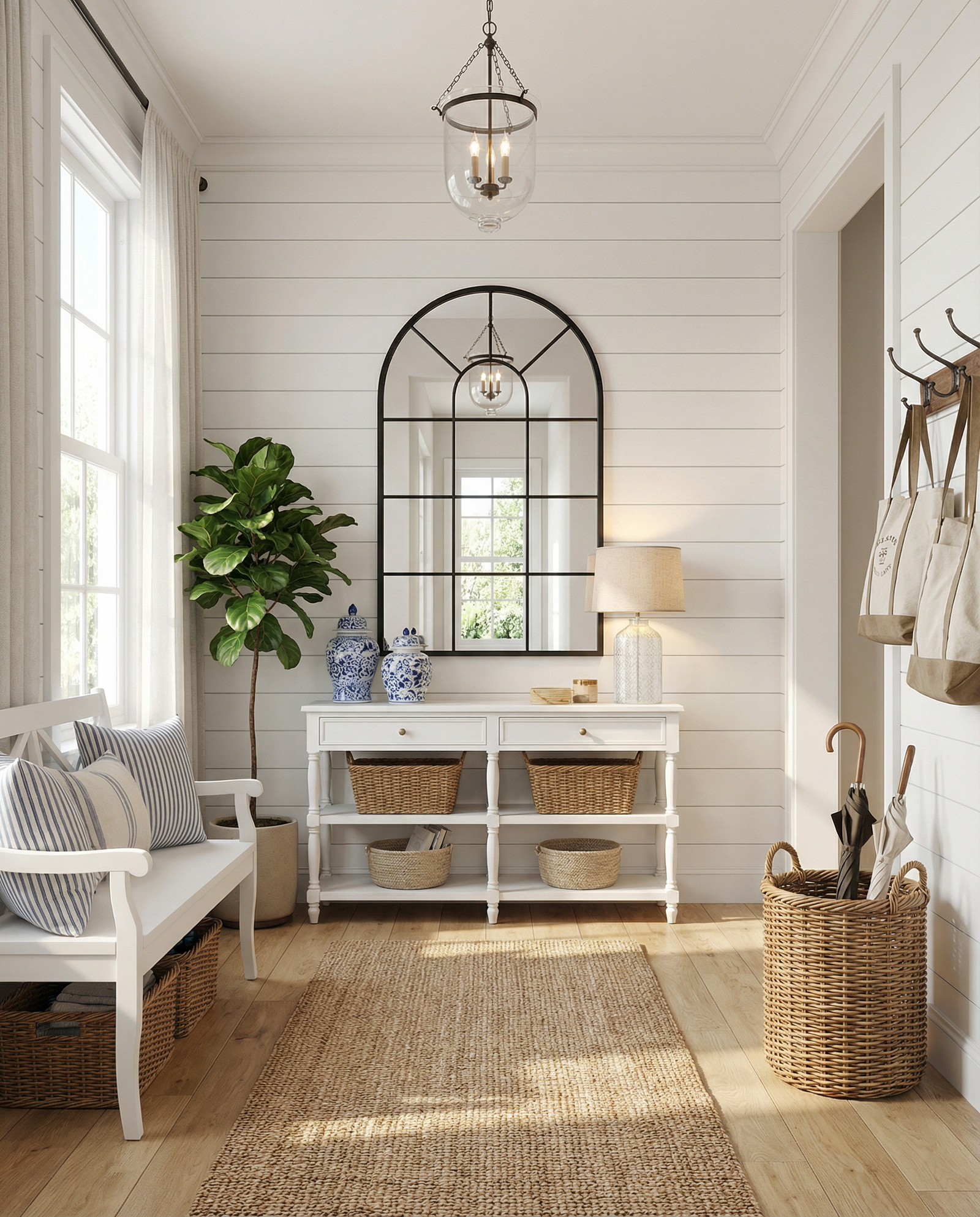
The arched shape adds a second layer of impact. Vertical arch forms draw the eye upward — the same psychological trick architects use with vaulted ceilings. An arched window pane mirror placed in a room with standard 8-foot ceilings makes those ceilings feel notably taller. It’s architectural theatre, and it works every time.
Mirrors positioned opposite a natural light source can increase perceived room brightness by up to 28%, according to a 2024 study in the Journal of Environmental Psychology. For rooms with limited windows — basements, interior hallways, north-facing apartments — a large arched mirror is one of the highest-impact single purchases a homeowner can make.
Where Should You Place a Mirror to Maximize Space?
Placement determines everything. A 2024 Houzz survey found that 68% of homeowners who added a large statement mirror rated it their most impactful single décor purchase — but those results depend entirely on where the mirror goes. Place it wrong and you get a cluttered wall. Place it right and you get a room that feels like it doubled in size.
Here are the four placement rules interior designers follow:
1. Opposite a Window (The Light Multiplier)
This is the most powerful placement in any room. Position your mirror directly across from a window and watch the natural light bounce back through the space. The room won’t just look bigger — it’ll look like it has twice as many windows. This works especially well in north-facing rooms that never get direct sunlight.
2. At the End of a Hallway (The Depth Creator)
A narrow hallway is one of the most challenging spaces in any home. Hang a large arched mirror at the far end and the hallway’s perceived length doubles instantly. The reflection creates a visual corridor that tricks the eye into reading the space as open rather than boxed in. Our 48×28″ arched mirror is the perfect fit for most hallway walls.
3. Adjacent to a Dark Corner (The Brightener)
Every room has a dead corner — the spot that feels dark and forgotten no matter how many lamps you add. A floor-leaning mirror positioned at a slight angle in that corner reflects both light and activity back into the space, making the entire room feel more alive. Our 70×30″ floor mirror was designed exactly for this purpose.
4. Behind Furniture (The Depth Layerer)
Placing a mirror above a sofa, console table, or sideboard creates visual depth behind your furniture. Instead of seeing a flat wall, you see space extending backward — making the seating area feel set within a larger room rather than pushed against a boundary.
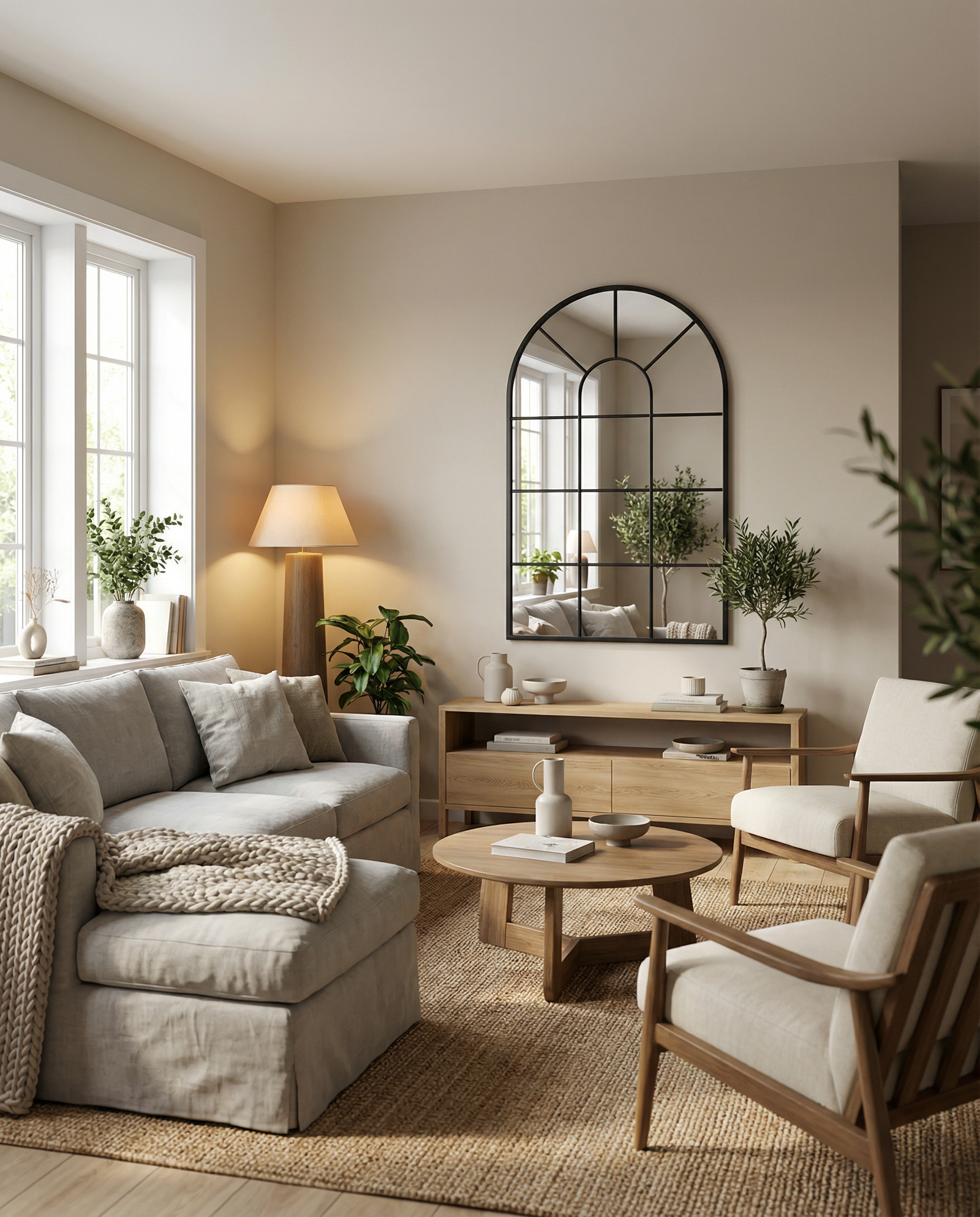
Interior designers consistently recommend placing mirrors at eye level — approximately 57 to 65 inches from floor to the mirror’s center point. This positioning creates the most natural depth illusion because it aligns with how the human eye scans a room at rest. Mirrors hung too high or too low interrupt the visual flow and reduce the space-expanding effect significantly.
What to avoid: Don’t place mirrors directly opposite your front door unless you have a large, beautiful entryway — it can create an unwelcoming “Who’s that?” effect for guests. And never hang a mirror where it reflects clutter. A mirror amplifies everything it reflects, good and bad.
What Size Mirror Works Best for Small Rooms?
Studies in interior design consistently find that homeowners underestimate mirror size — and this is the single most common mistake in the category. Going too small defeats the purpose entirely: a 20″ mirror in a 12-foot room doesn’t expand the space, it just adds a decoration. The space-expanding effect requires a mirror that commands visual attention.
Here’s the sizing guide we give every Salkala Decor customer:
| Room / Space | Recommended Size | Why It Works |
|---|---|---|
| Powder room / small bathroom | 32×20″ | Fills compact walls, adds instant character |
| Narrow hallway / entryway | 48×28″ | Wide enough to reflect light, tall enough to create depth |
| Living room / dining room | 64×30″ | Statement scale, reflects full seating areas |
| Bedroom / large living room | 70×30″ | Full-length presence, maximum space illusion |
The rule of thumb: your mirror should be roughly two-thirds the width of the piece of furniture it sits above. A sofa that’s 84″ wide pairs best with a mirror 54–60″ wide. When in doubt, size up — you can always lean a large mirror rather than hang it, which gives you flexibility to adjust placement.
At Salkala Decor, the most common feedback we hear from customers who went with our 64×30″ or 70×30″ mirrors is: “I wish I’d done this years ago.” The customers who return to exchange a mirror almost always go bigger, never smaller. Our 70×30″ arch mirror is our bestseller specifically because it delivers the full space-expanding effect that smaller mirrors can’t achieve.
How to Style a Mirror So It Looks Intentional, Not Accidental
A mirror hung in isolation on a bare wall can look like an afterthought. The difference between a mirror that looks designed and one that looks forgotten comes down to three things: framing, anchoring, and layering.
Frame It with Something Organic
Pair your mirror with organic textures — a dried pampas grass arrangement, a terracotta vase, a linen-covered lamp. The contrast between the hard black metal frame of an arched mirror and soft natural materials creates a visual tension that feels curated and intentional. This is the secret behind almost every Pinterest-worthy entryway shot.
Anchor It to Furniture
A floating mirror in the middle of a wall looks unmoored. Ground it by hanging it above a console table, dresser, or sideboard. The furniture becomes the mirror’s visual anchor and the two pieces work together as one composed vignette rather than two separate objects.
Consider What It Reflects
Before you hang your mirror, stand where it will go and look at what it will reflect. You want it to show something beautiful — a window, a styled bookshelf, a plant, or a view into another room. The reflection is half the composition. If it reflects a blank wall or an untidy corner, reposition it until the view improves.
Our observation: Customers who style their Salkala Decor mirror with at least one organic element — a plant, dried botanicals, or natural wood — consistently rate their satisfaction higher than those who hang the mirror alone. The mirror becomes the centrepiece of a composition rather than a lone decoration. Interior designers call this “vignette thinking” and it’s one of the easiest skills to develop.
See our mirrors in action — a short look at how Salkala Decor arched window pane mirrors transform real spaces:
Shop the Look — Salkala Decor Arched Window Pane Mirrors
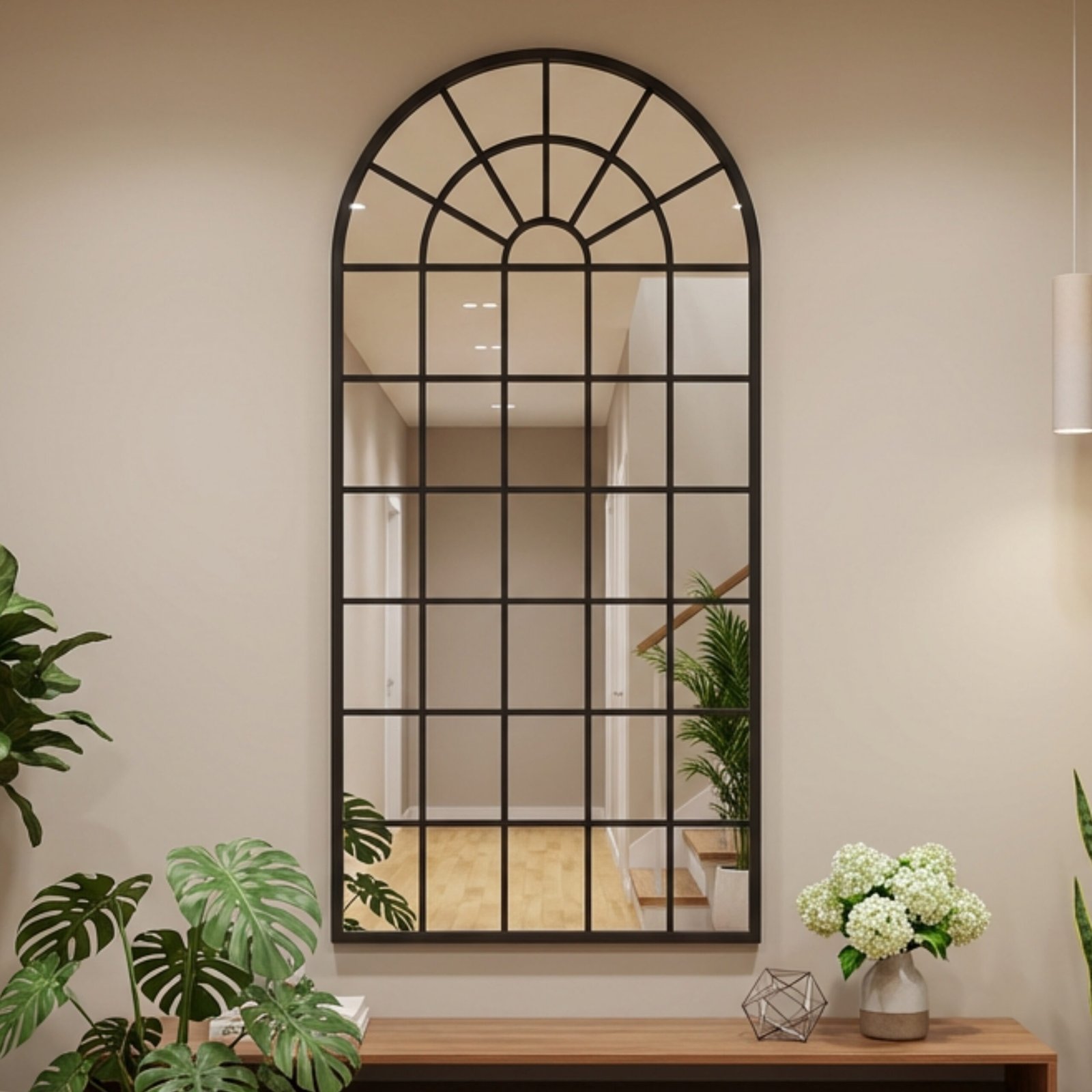
Every Salkala Decor mirror is designed as a décor object first — not just a reflective surface. Our arched window pane mirrors combine a premium black metal frame with crystal-clear glass and architectural proportions that elevate any room, in any style. Available in four sizes to suit every wall and every space:
- 32×20″ Arched Window Pane Mirror — Perfect for powder rooms, gallery walls, and compact entryways
- 48×28″ Arched Window Pane Mirror — The ideal hallway and mid-size living room mirror
- 64×30″ Arched Window Pane Mirror — A true statement piece for living rooms and dining rooms
- 70×30″ Arched Window Pane Mirror — Our most popular size — full-length, floor-leaning drama or wall-mounted grandeur
Shop the full collection at salkaladecor.store or on Amazon USA with fast Prime shipping. Also available on Etsy.
Frequently Asked Questions
Do mirrors actually make rooms look bigger?
Yes — and the effect is measurable. Environmental psychology research published in 2024 found that mirrors increase perceived room size by 20–30% when correctly positioned. The key is size and placement: the mirror must be large enough to reflect a meaningful portion of the room, and positioned to bounce either natural light or an appealing view back into the space.
What is the best type of mirror for making a small room look bigger?
Large, vertically oriented mirrors work best for expanding perceived space. An arched window pane mirror like Salkala Decor’s AWPM range is particularly effective because the vertical arch draws the eye upward — making ceilings feel taller — while the width reflects enough of the room to create genuine depth. A 2024 Houzz study found arched mirrors rank among the top-rated mirror styles for perceived room expansion.
Where should you not place a mirror?
Avoid placing mirrors where they’ll reflect clutter, an uninspiring blank wall, or directly opposite your front door in a cramped entryway. A mirror amplifies whatever it reflects — so position it where the reflected view adds beauty. Also avoid placing mirrors at foot-of-bed level in bedrooms, as the reflection can be disorienting when waking, according to sleep environment researchers.
How high should a mirror be hung on the wall?
The center of a wall-hung mirror should sit at approximately 57–65 inches from the floor — this aligns with average adult eye level and ensures the reflection captures the most useful portion of the room. For mirrors hung above furniture like consoles or sideboards, leave 6–8 inches of space between the top of the furniture and the bottom of the mirror for a composed, intentional look.
Can I lean a large mirror instead of hanging it?
Absolutely — leaning is actually a preferred styling choice for large floor mirrors because it adds a casual, lived-in elegance that hung mirrors can’t replicate. Our 70×30″ arched mirror is specifically designed to lean beautifully against a wall with a natural forward tilt. Make sure the floor surface is stable and consider anchoring to the wall with a safety cord for households with young children, as recommended by home safety guidelines.
Final Thoughts
The most beautiful rooms aren’t always the largest ones — they’re the ones that feel considered, light-filled, and alive. A well-placed mirror, in the right size, does all three things at once. It borrows light. It creates depth. And it adds a piece of design that becomes a conversation point every time someone walks into the room.
That’s what we build at Salkala Decor. Not just mirrors — but the feeling of a room that’s been truly thought through. Browse the full collection and find the size that belongs on your wall.
→ Shop All Salkala Decor Mirrors
→ Shop on Amazon USA (Prime Shipping)
Salkala Decor — Luxury Meets Reflection. Shop at salkaladecor.store or on Amazon USA.